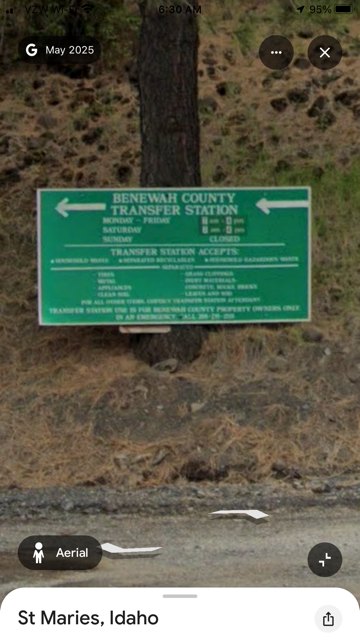
Meet a Vital County Service: Your Local Transfer Station
Benewah County has a transfer station located just south of St. Maries, along with a network of conveniently placed dumpsters throughout the county.
For those of us who use the dumpsters, having a place nearby to dispose of household trash is a valuable county service. But there can sometimes be confusion about what belongs in those dumpsters and what should instead be taken directly to the transfer station. We recently spoke with a county employee, who asked to remain anonymous, to clear up some of the misconceptions about the county's waste system and explain what can and cannot be disposed of at the dumpsters and transfer station
What belongs in the county dumpsters?
The dumpsters located throughout the county are intended specifically for general residential trash, essentially the same type of everyday household garbage you would put into a trash can if you had regular curbside pickup. A light amount of yard waste is also acceptable. Large furniture, appliances, metal and other bulky materials should not be left in or around the dumpsters. Those items need to be taken to the transfer station.
What can you take to the Transfer Station?
The transfer station is the place to take mattresses, bookcases, box springs, furniture, and other bulky household goods that would not normally fit into a residential trash can. These items are charged by weight at 8.5 cents per pound and go through the weigh station. Regular, everyday household trash can also be brought directly to the transfer station at no charge.
One of the more useful services, and one residents may not realize is available, is free metal disposal. Refrigerators, freezers, old hot-water heaters, lawn mowers and many other metal items can be dropped off at the transfer station for free. Residents are asked, when possible, to remove wheels, fabric, wood or other nonmetal materials before dropping the items off. So, that non-working freezer taking up space in your garage? Yes, you can take it to the transfer station for free.
Why metal doesn't belong in the dumpsters: keeping metal appliances and other large metal objects out of the county dumpsters isn't simply a matter of convenience. According to the county employee we spoke with, these items can cause significant damage to garbage trucks and can also create safety hazards for employees who have to remove refrigerators, stoves, and other heavy metal objects that have been improperly discarded. Taking them directly to the transfer station protects both county equipment and the people who operate it — and since metal disposal is free, there is little reason to put these items into a dumpster.
What can't the Transfer Station accept?
There are some materials the transfer station is not equipped to process. These include cars, trailers, stones, concrete, root wads, electric-vehicle batteries, railroad ties, oil and other vehicle fluids.
Tires can be accepted for a fee:
$4 per tire
$6 per tire with a wheel
$12 for a semi tire or larger
Tires can also be taken to Les Schwab for a fee. Used motor oil may be accepted by various local automotive and mechanic shops, also generally for a fee.
Where does Benewah County's garbage go?
One of the less visible parts of our local waste system happens after the garbage leaves Benewah County. Currently, the county must pay to truck its waste to Missoula, Montana, where additional fees are paid for landfill disposal. Those transportation and landfill costs have been increasing. According to the county employee we spoke with, those rising expenses have contributed to an increase in the amount Benewah County taxpayers will pay toward solid-waste services in the coming year.
Is there a long-term alternative?
Benewah County Commissioners have been discussing possible long-term solutions, including the potential development of a county waste incinerator. Such a project would be a significant undertaking. It would require permitting, financing, possible grant funding and, as our source put it, a "good deal of money" upfront.
County officials are considering whether those initial costs could eventually be offset by eliminating the expense of trucking Benewah County's garbage to Montana and paying outside landfill fees. A local facility could also potentially create jobs and provide an opportunity for surrounding counties or municipalities to contract with Benewah County for waste disposal. There would, of course, be many questions to answer before such a project could move forward, including its cost, permitting requirements, operating expenses, environmental controls, capacity and the type of waste-processing technology that would be used.
For now, the county's existing transfer station and dumpster system remains an important and sometimes under-appreciated local service. And residents can help keep that system working efficiently by following one fairly simple rule: Everyday household garbage goes in the dumpsters. Bulky items and metal go to the Transfer Station.